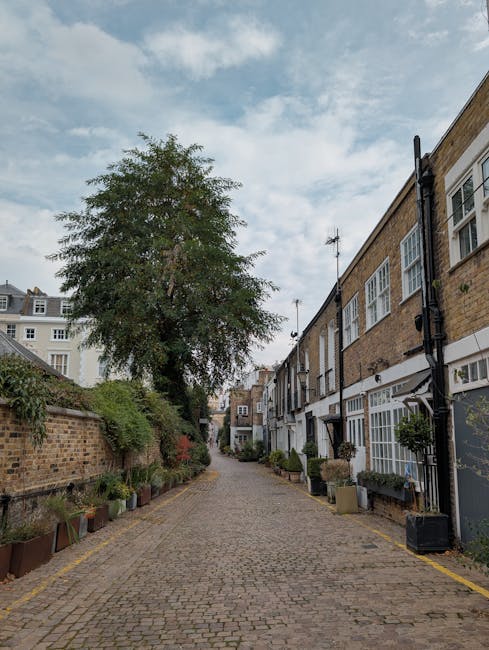
Access issues for Seven Sisters gardeners in narrow mews: practical solutions for tight London spaces
Narrow mews can look charming from the street and feel awkward the moment a wheelbarrow, mower, ladder, or bagged green waste needs to get through. That is exactly why access issues for Seven Sisters gardeners in narrow mews matter so much. In small back gardens, shared lanes, and tight service paths, the difference between a smooth visit and a frustrating one is often a matter of inches, turning space, and a bit of planning. If you live in one of these compact London settings, or you manage properties there, this guide will show you what actually works in the real world.
You will find straightforward advice on planning access, reducing disruption, choosing the right services, and avoiding the usual mistakes that make a simple garden job harder than it needs to be. Truth be told, a lot of access problems are solvable before anyone arrives. A little preparation goes a long way.
Quick expert summary: In narrow mews, the best results come from careful pre-visit checks, smaller tools, good waste-handling plans, and realistic timing. Don't just think about the garden itself; think about how people, equipment, and waste get in and out.
Table of Contents
- Why access matters in narrow mews
- How access planning works
- Key benefits and practical advantages
- Who this is for
- Step-by-step guidance
- Expert tips for better results
- Common mistakes to avoid
- Tools, resources and recommendations
- Law, compliance and best practice
- Options, methods and comparison
- Case study or real-world example
- Practical checklist
- Conclusion
- Frequently asked questions
Why Access issues for Seven Sisters gardeners in narrow mews Matters
Garden access sounds like a small operational detail. In narrow mews, it is often the whole job. If a gardener cannot bring in tools safely, cannot move waste out efficiently, or has nowhere to turn a wheelbarrow, time stretches, costs rise, and the risk of damage goes up. That can mean scuffed walls, broken pots, blocked passageways, or a half-finished job that takes longer than expected.
This is especially relevant in compact London locations where properties may share alleys, rear entrances, or tightly bounded service routes. A garden that looks modest from the outside may still hide a surprisingly tricky route for machines, materials, and cuttings. Let's face it: a lawn mower is easy to use on paper. Getting it through a very tight gate with no clear turning point is another story entirely.
Access problems also affect the quality of the finish. If a team has to use the wrong equipment because the right kit cannot physically get in, the result may be slower, less tidy, and more disruptive. That is why access planning is not just a convenience. It is part of good garden care.
If you want to see how this fits within a broader service approach, it helps to look at the wider range of work offered through the services overview, especially where maintenance, clearance, and landscaping all depend on sensible site access.
How Access issues for Seven Sisters gardeners in narrow mews Works
In practice, access planning is a simple sequence: measure, assess, adapt, and then work methodically. A good gardener or landscaping team will usually start by asking how the property is entered, where materials can be staged, what width the access route allows, and whether there are any awkward corners, steps, or shared spaces.
There are usually four access points to think about:
- Pedestrian access for the team carrying tools in and out.
- Equipment access for mowers, trimmers, ladders, and heavier items.
- Waste access for green waste, soil, branches, and bags.
- Emergency access in case something needs to be moved quickly.
In a narrow mews, these can all be different. A front gate might admit a person but not a mower. A side passage may be fine for hand tools but useless for bulky waste sacks. That means the job plan should be based on the most restrictive part of the route, not the easiest one.
Gardeners often adapt by using compact equipment, breaking work into smaller stages, and keeping traffic through the space as light as possible. A team might bring in tools in a staged order, remove waste more frequently, or use smaller containers rather than oversized bags. Simple, but effective.
There is also the human side. Shared mews can mean neighbours, parked vehicles, bikes, bins, or delivery obstacles. You cannot always control those things, but you can plan around them. A quick note to residents the day before sometimes saves a surprising amount of hassle.
Key Benefits and Practical Advantages
Good access planning brings more than convenience. It changes the whole feel of the job.
- Less disruption for residents and neighbours.
- Lower risk of damage to walls, paving, gates, and planting.
- Faster turnaround because the team can work in a clean sequence.
- Better results since the right tools can actually be used.
- Clearer pricing because the scope is easier to estimate honestly.
One of the less obvious benefits is confidence. When access is properly assessed, everyone knows what to expect. No one is surprised when a job takes a little longer because waste has to be carried by hand through a tight passage. No one is left guessing why a large machine was not used. That clarity matters. It keeps expectations sane, which, in fairness, is half the battle.
For homeowners, this often means less stress and fewer last-minute changes. For landlords and managing agents, it means smoother scheduling and a more professional finish. For gardeners, it means fewer avoidable delays and a safer working day.
Who This Is For and When It Makes Sense
This topic is relevant to anyone responsible for gardens where access is constrained, but it is especially useful in narrow mews, back lanes, compact courtyards, and shared residential spaces around Seven Sisters and nearby parts of north London.
You may need this approach if you are:
- a homeowner with a tiny rear access route;
- a landlord or letting agent arranging regular maintenance;
- a property manager coordinating work across multiple homes;
- someone booking clearance after a long period of neglect;
- a resident who has had previous issues with awkward deliveries or blocked gates;
- anyone considering landscaping work that will involve materials, soil, timber, or heavy lifting.
It also makes sense whenever the job involves more than light trimming. A quick hedge tidy is one thing. A full clearance, new decking, turf replacement, or structural landscaping job is another altogether. The heavier the materials, the more the access route matters.
If you are exploring maintenance support rather than one-off work, it may help to review garden maintenance as a regular service option. If the site is very tight, steady maintenance is often easier than letting problems build up until a big intervention is needed.
Step-by-Step Guidance
Here is the practical sequence that usually works best in narrow mews settings.
- Map the access route. Measure gate widths, passage widths, steps, corners, ceiling height where relevant, and any pinch points.
- Identify obstacles. Look for bins, bikes, planters, low branches, awkward locks, uneven paving, and parked vehicles.
- Decide what must come in and out. Tools, plants, soil, timber, compost, waste sacks, and any machinery all need a route.
- Match the job to the access. If access is tight, use smaller tools and split work into stages.
- Plan waste handling. Do not leave this as an afterthought. Green waste often creates the biggest bottleneck.
- Confirm communication. Make sure the gardener knows the route, the contact person, and any timing restrictions before arrival.
- Prepare the space. Move cars if possible, clear the route, and open any gates or internal locks in advance.
- Review the finish. Check that the route was left tidy and that no surfaces were marked or blocked.
A useful habit is to think in terms of movement. How does the first person get in? Where does the first bag go? Where does the mower turn? If you can answer those questions, you are already ahead.
When garden clearance is involved, access planning becomes even more important. A tight route that is fine for pruning may be too restrictive for bulky waste removal, so it is worth looking at garden clearance if the job involves large volumes of cuttings or debris.
Expert Tips for Better Results
Here is where experience pays off. Small choices make a big difference in narrow mews settings.
Use the lightest practical equipment
Compact, easy-carry tools are often better than large machines if access is awkward. That does not mean compromising quality. It just means being realistic about the route. A well-chosen hand tool can often do a cleaner job than a machine that barely fits.
Work from the farthest point back
Start at the deepest part of the garden and work back toward the exit. That keeps paths clear and reduces repeated trips over finished areas. Simple idea. Very useful.
Keep waste moving
In tight spaces, piles of cuttings become trip hazards fast. Remove waste regularly rather than letting it collect. You will notice the difference immediately; the space feels calmer, and the work moves more cleanly.
Protect surfaces before you start
If paving, timber decking, or painted walls are close to the work area, use sensible protection. Narrow routes make accidental scuffs more likely. A bit of care at the start saves arguments later.
Check gates, locks, and timings
It sounds obvious, but people forget. A gate that sticks, a lock nobody can open, or a delivery arriving at the wrong time can derail the whole visit. Better to spend five minutes checking than twenty minutes waiting.
Don't overfill the plan
There is a temptation to squeeze in one more task because the team is already there. In mews properties, that can be a mistake. Tight access means everything takes longer to move. Leave room in the schedule.
If your project includes hedges or dense planting along a narrow route, the hedge trimming service is particularly relevant because overgrowth often narrows access more than people expect. And if trees are part of the problem, especially low limbs or encroaching crowns, tree lopping and removal may be necessary before routine work can be done safely.
Common Mistakes to Avoid
Most access problems are predictable. That is the good news. The bad news is that people keep making the same ones.
- Assuming access is fine because "someone has done it before". Previous success does not mean the route is still suitable, especially if growth, storage, or parked vehicles have changed.
- Forgetting waste removal. A garden may be easy to enter but hard to clear once the cuttings start piling up.
- Not measuring properly. Estimating by eye is risky. A few centimetres can decide whether a trolley fits.
- Choosing the wrong service scope. A light tidy-up is not the same as a clearance or landscaping job.
- Ignoring neighbour impact. Shared mews are close quarters. Noise, movement, and temporary blockage need a bit of tact.
- Leaving access prep until the morning of the job. That is when things get messy, and usually at the worst possible time.
To be fair, mistakes happen. The trick is to catch them early. If a team arrives and immediately starts asking basic route questions, that usually means the planning stage was rushed. Not ideal.
Tools, Resources and Recommendations
You do not need a warehouse of specialist kit to handle narrow mews access well. The best setup is usually about practicality, not flashiness.
Useful tools and equipment
- compact hand tools for pruning, weeding, and edging;
- lightweight wheelbarrows or transport tubs;
- folding ladders where safe and suitable;
- tarpaulins or protective sheeting for surfaces;
- strong but manageable waste sacks;
- cordless tools where noise and cable management are issues;
- basic measuring tape for gate and passage checks.
Recommended service areas to think about
Some jobs are more access-sensitive than others. Routine mowing may be straightforward if the route is clear, but it becomes trickier once the pathway narrows. For that reason, it helps to look at lawn mowing for maintenance-heavy spaces, landscaping for larger redesigns, and landscape gardening when the aim is to improve both function and appearance.
Decking projects can also be access-sensitive because timber, fixings, and subframe materials take up room fast. If you are planning a build or replacement, take a look at decking services and think early about how materials will be brought through the property.
Practical recommendation
If the access route is awkward, ask for the job to be quoted with the route in mind, not just the garden size. A tiny garden behind a tricky passage may be more labour-intensive than a larger space with easy rear access. That little distinction matters a lot.
Law, Compliance, Standards, or Best Practice
For most homeowners, the issue is not a special legal hurdle so much as good working practice. But there are still sensible standards to follow. Garden work should be carried out safely, with care for people, property, and shared access routes. In shared mews, that means respecting neighbours, keeping walkways usable where possible, and avoiding unnecessary obstruction.
Where contractors are involved, they should be clear about their safety approach, public liability cover where applicable, and how they manage risk in tight spaces. It is also reasonable to ask how they handle manual lifting, trip hazards, sharp tools, and waste removal. If a team cannot explain their process in plain English, that is worth paying attention to. Probably more than people think.
For a broader sense of how a provider approaches this kind of work, the pages on health and safety policy, insurance and safety, and accessibility statement can help set expectations around responsible working practices. If you want to understand how service terms, payments, or site conditions are handled, the most relevant supporting pages are terms and conditions and payment and security.
Recycling and responsible waste handling are also part of good practice, especially where green waste has to be carried by hand through shared access. If that matters to you, the recycling and sustainability page is a sensible place to review expectations.
Options, Methods, or Comparison Table
There is no single perfect method for every narrow mews garden. The right approach depends on what needs doing, how tight the access is, and how much disruption you can tolerate.
| Method | Best for | Pros | Trade-offs |
|---|---|---|---|
| Hand tools and staged removal | Very tight passages, small courtyards, delicate surfaces | Flexible, low-risk, easier to control | Slower on larger jobs |
| Compact cordless equipment | Routine maintenance, tidying, repeated visits | Efficient, quieter, easier to carry | May not suit heavy clearance |
| Split-phase work | Projects needing repeated access for materials and waste | Good for complex jobs, less crowded on site | Requires stronger planning and scheduling |
| Full-access clearance plan | Overgrown gardens, structural changes, larger waste volumes | Better for major improvement work | Can need more labour and more lead time |
In narrow mews, the split-phase approach is often underrated. It sounds less efficient at first, but it can actually keep the job safer and tidier. Less clutter. Less rushing. Fewer awkward carry-backs through a cramped passage.
Case Study or Real-World Example
Picture a small rear garden reached through a narrow shared passage off a mews lane. The gate is just wide enough for one person with a tool bag. The garden itself needs hedge trimming, lawn work, and a bit of clearance from the back corner where old pots and trimmings have built up over time.
On paper, it looks like a half-day visit. In practice, the route changes everything. A full-size mower would be awkward, waste would need regular removal, and the passage could not be blocked for long because residents still need access. So the work is broken down: tools are carried in first, the hedge is trimmed in sections, clippings are gathered immediately, and waste is moved out in smaller loads rather than one large, messy pile.
The result is better in every sense. The garden is finished more neatly, the passage stays usable, and nobody has to climb over bags of cuttings. The job takes a little more coordination, yes, but the outcome is calmer and more professional. That is usually the trade-off in narrow mews work: a bit more planning up front, a lot less chaos later.
If the space has become heavily overgrown, the team may also recommend a clearance-first approach before returning for maintenance. That is often the most sensible way to reset the garden without trying to do everything at once.
Practical Checklist
Use this before any garden visit in a narrow mews.
- Measure gate widths and passage widths.
- Check for steps, turns, low branches, or tight corners.
- Confirm what equipment can physically fit through the route.
- Plan where waste will be stacked and removed.
- Move vehicles, bins, bikes, and stored items if possible.
- Tell neighbours or residents if the route is shared.
- Decide whether the work needs maintenance, clearance, or landscaping support.
- Prepare surface protection for paving, decking, or painted walls.
- Check access timing and any restrictions on noise or blocking.
- Make sure the team has a clear contact person on the day.
Helpful rule of thumb: if you have to "make it work on the day", the plan was probably too optimistic. Better to be a little cautious and finish well than to improvise through a narrow gate at the last minute.
Conclusion
Access issues for Seven Sisters gardeners in narrow mews are not just a nuisance; they shape how the whole job is designed, priced, and delivered. When access is measured properly and planned with care, even a tight, awkward route can become manageable. That means safer work, less disruption, and a better result for everyone involved.
The main thing is not to treat access as an afterthought. It belongs at the centre of the plan, right alongside the gardening itself. Once that mindset clicks, the rest tends to fall into place. And honestly, it makes the work feel a lot less stressful.
If you are preparing a garden job in a narrow mews and want a straightforward, professional approach, start by thinking about access first, then everything else around it. A little preparation now can save a lot of faff later.
Get a free quote today and see how much you can save.
Frequently Asked Questions
What makes narrow mews access so difficult for gardeners?
The main issue is space. Tight gates, narrow passages, shared entrances, and limited turning room make it harder to bring in tools, move waste, and work safely without disturbing the property.
Can garden work still be done if a mower will not fit through the gate?
Yes. In many cases, gardeners switch to compact equipment or hand tools. Sometimes the job is planned as a staged visit, with smaller tools used for maintenance and manual waste removal.
How do gardeners usually measure access before a visit?
They normally check gate width, passage width, surface conditions, turns, steps, and any obstacles. Photos can help, but a proper measurement is better when the route is especially tight.
Is access planning only important for big jobs?
No, not at all. Even routine pruning or mowing can become awkward if access is poor. Bigger jobs simply make the problem more obvious.
What should I clear before the gardeners arrive?
Move bins, bikes, parked items, and loose clutter from the route. If possible, open gates and unlock any shared access points. That small bit of prep usually helps a lot.
Does narrow access affect pricing?
It can. If work must be carried by hand, split into stages, or completed with smaller equipment, the time needed may increase. The best quotes are based on the actual access conditions, not just the garden size.
What type of jobs are most affected by access issues?
Garden clearance, landscaping, hedge work, tree work, and decking projects usually feel the impact most because they involve bulkier materials, more waste, or heavier tools.
How do gardeners protect surfaces in narrow mews?
They may use protective sheeting, careful routing, and sensible stacking points to reduce scuffs or marks. The exact method depends on the surface and how tight the route is.
Should neighbours be told before work starts?
If access is shared or likely to affect neighbours, yes. A quick heads-up can avoid misunderstandings, especially where gates, bins, or pedestrian routes are involved.
What if my garden has been neglected for a long time?
Then access may be even tighter than it looks. Overgrowth often narrows paths and hides obstacles. In that case, clearance first is often the smartest place to start, followed by maintenance.
Can landscaping work be done in a narrow mews?
Absolutely, but it needs careful planning. Materials, deliveries, and waste all need a workable route. Some projects are broken into phases to keep the site usable and avoid overcrowding.
How do I know whether I need maintenance or clearance?
If the garden mainly needs tidying and routine upkeep, maintenance may be enough. If growth, debris, or clutter is blocking access and making the space hard to use, clearance is usually the better first step.
For more information about the company and how it works, you may also wish to review the about us page or get in touch through the contact us page when you are ready to discuss a specific site.